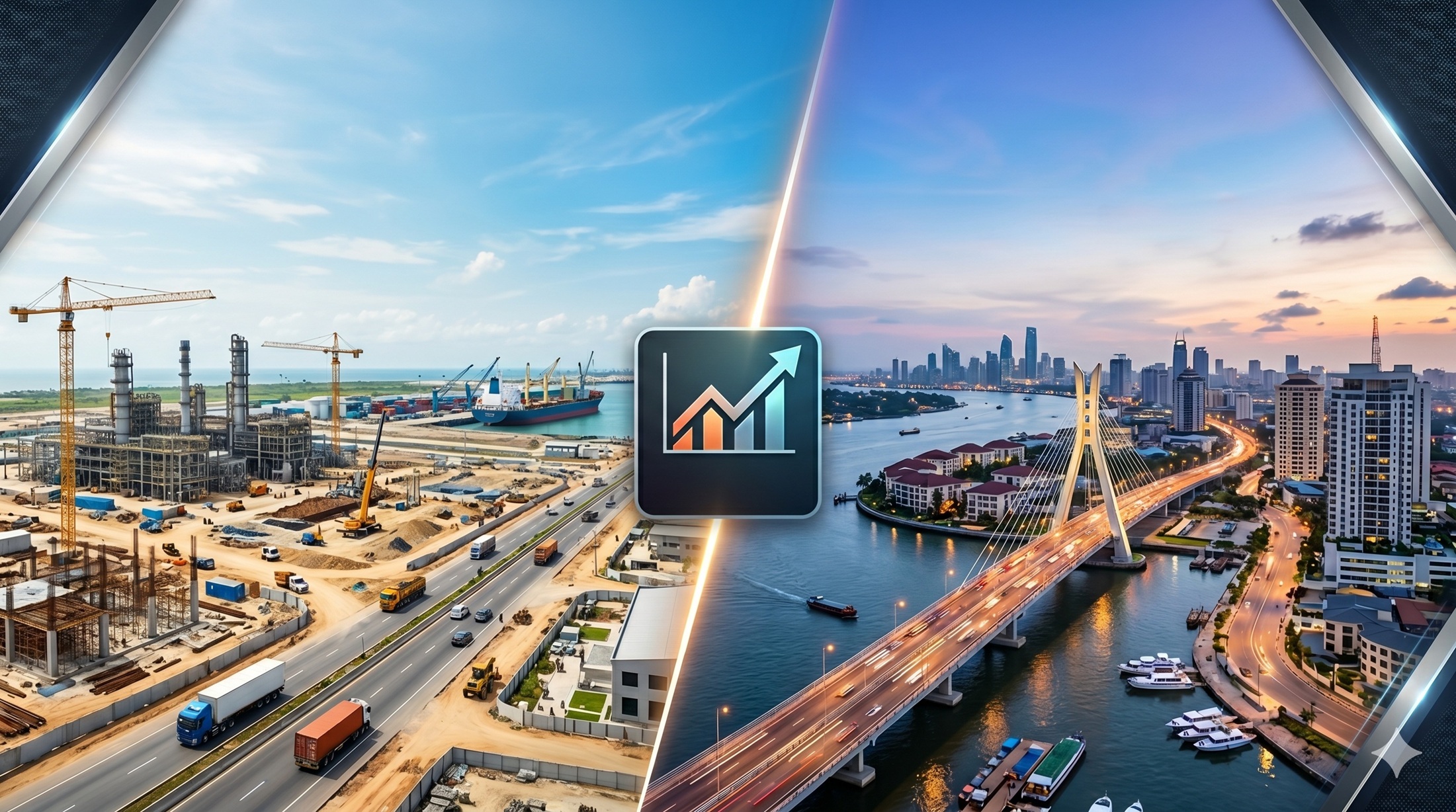
This is one of the hottest debated questions in Nigerian real estate right now.
On one side, you have Lekki Phase 1 — established, prestigious, liquid, and expensive. On the other side, you have Ibeju-Lekki — affordable, infrastructure-charged, rapidly appreciating, and surrounded by a level of hype that makes even experienced investors nervous.
Both locations are legitimate investment destinations. But they serve completely different investor goals, timelines, and risk profiles. Choosing the wrong one for your situation is not just a missed opportunity — it can mean locking your money in the wrong asset for years.
At MiraEmma Properties, we work with investors across both corridors every day. Here is our honest, data-backed comparison of Ibeju-Lekki versus Lekki Phase 1 in 2026.
1. The Price Gap Is Enormous and That Is the Whole Story
If you want to understand this debate, start with the numbers. Nothing clarifies the choice faster.
In Lekki Phase 1, residential land currently sells for between N500,000 and N1,200,000 per square metre, depending on the specific street, title quality, and proximity to key roads. Premium sub-estates like Nicon Town, Pinnock Beach, and Cowrie Creek range from N650,000 to N800,000 per square metre. A complete house in Lekki Phase 1 averages around N670 million, with high-end properties easily crossing N1 billion.
In Ibeju-Lekki, the same money tells a completely different story. Residential land in this corridor sells for between N5 million and N45 million per plot — roughly N50,000 to N100,000 per square metre, depending on location and title type. Premium estates closest to the Lekki Free Trade Zone, the Dangote Refinery, or the Deep Sea Port command the upper end of that range.
To put that in plain terms: for the price of a standard plot in Lekki Phase 1, you could own between 8 and 20 plots in Ibeju-Lekki.
That gap is not a mistake or a reflection of fraud — it is a reflection of where each location sits in its development cycle. Lekki Phase 1 is fully matured. Ibeju-Lekki is still in the growth phase. And the entire investment debate flows from that single fact.
2. What You Are Actually Buying in Each Location

This distinction is critical, and many investors miss it entirely.
When you buy in Lekki Phase 1, you are buying a finished product. The roads are paved. The infrastructure is in place. The tenant market is deep. The resale market is liquid. You can buy a property today and start earning rental income within 60 to 90 days. You can sell it within six months if you need to exit. The market is transparent, the demand is real, and the risk of your investment becoming stranded is very low. What you are paying for is all of that certainty.
When you buy in Ibeju-Lekki, you are buying a promise. Not a fraudulent one — a genuine one backed by billions of dollars in government and private infrastructure investment. But a promise nonetheless. The Dangote Refinery, the Lekki Deep Sea Port, the Lagos Free Trade Zone, and the first section of the Lagos-Calabar Coastal Highway that opened in 2025 are all real. The appreciation they are driving is real — properties within 5km of these projects are already registering annual price increases of 50% to 70% according to the Nigerian Institution of Estate Surveyors and Valuers. But the rental market is still thin, the roads in many parts are still being developed, and your money will be sitting in that land for years before the full return materialises.
One location is an income asset. The other is a growth asset. The mistake investors make is treating them as interchangeable.
3. Rental Yield: Lekki Phase 1 Wins Today, Ibeju-Lekki Is Catching Up
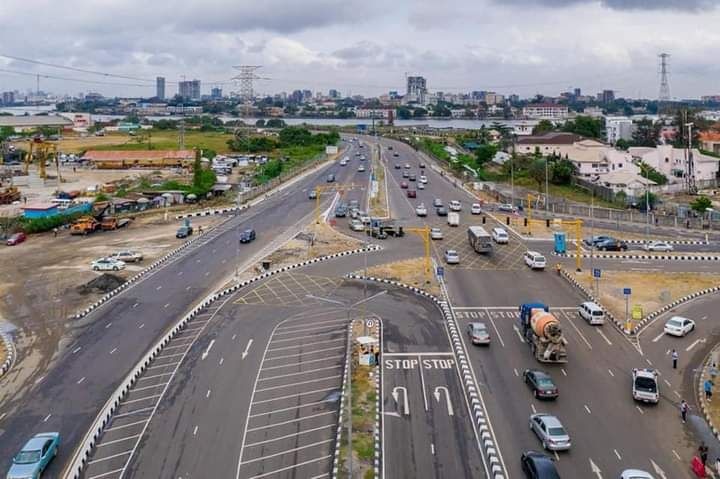
If generating rental income is part of your investment plan, Lekki Phase 1 is the clear winner right now.
Residential properties in Lekki Phase 1 generate gross rental yields of 4.4% to 6%, with well-located short-let and Airbnb units in premium estates achieving up to 12%. The tenant pool is deep, diverse, and reliable — young professionals, corporate tenants, and families all compete for quality units here.
Ibeju-Lekki is a different picture today, but it is changing fast. Well-located properties near the Free Trade Zone, the port facilities, and commercial estates are already achieving yields of 8% to 12% for investors who moved early and built or bought properties to rent to the growing workforce in the area. However, these are specific pockets of strong demand — not the corridor-wide story. In less developed parts of Ibeju-Lekki, rental demand remains thin, and a landlord waiting for tenants in 2026 may be waiting a long time.
The honest summary: if you need your investment to generate cash flow soon, buy in Lekki Phase 1. If you can wait five to seven years for the rental market in Ibeju-Lekki to fully develop alongside its infrastructure, the eventual yield upside is significant.
4. The Title Problem in Ibeju-Lekki That Nobody Wants to Talk About
Why This Issue Is Often Ignored
This is the part of every Ibeju-Lekki conversation that gets skipped over too quickly — and it is the one that matters most.
The Reality of Land Titles in Ibeju-Lekki
Land title integrity in Ibeju-Lekki is not uniform. The corridor is made up of over 40 communities and towns, many of which are still in various stages of the land excision and gazetting process.
A Certificate of Occupancy (C of O) — the gold standard of Nigerian land title — is available in the area but commands a significant price premium. Below it, in descending order of security, are:
- Gazetted Excision
- Excision in Progress
- Family land with no formal documentation (the most risky category)
The “Excision in Progress” Trap
The phrase “excision in progress” is one of the most abused terms in Nigerian real estate.
It is used by legitimate developers who have genuinely applied to the Lagos State Lands Bureau and are awaiting approval. However, it is also used by fraudsters who have no application at all, relying on buyer excitement and the complexity of verification to close deals before the truth emerges.
The Hidden Risk Most Buyers Underestimate
According to property analysis data, approximately 18% to 22% of Ibeju-Lekki land sales face ownership disputes within five years of purchase.
Government demolitions, boundary disputes, and Omo-Onile interference are not rare occurrences in this corridor — they are documented, recurring events that have cost investors hundreds of millions of naira.
What Smart Investors Should Do
This does not mean you should not invest in Ibeju-Lekki. It means you must verify, verify, and verify again before paying a single kobo.
Any plot without:
- A C of O
- A Gazetted Excision
- Or a verifiable Excision from the Lagos State Lands Bureau
should be approached with extreme caution — no matter how compelling the agent’s presentation or how well-known the developer’s name.
Why Lekki Phase 1 Feels Different
In Lekki Phase 1, this level of title anxiety simply does not exist. The land title ecosystem is mature, and a straightforward registry search will typically provide all the information you need before making a commitment.
5. Liquidity: What Happens When You Need to Sell

Let us talk about the exit, because not enough investors plan for it.
Lekki Phase 1 is one of the most liquid property markets in Nigeria. If you need to sell a well-maintained, correctly priced property here, you will find a buyer. The market is transparent, agents are active, and the demand from both local and diaspora investors is constant. In a distress situation, you might take a 5% to 10% haircut on price, but you will exit. Your money is not trapped.
Ibeju-Lekki is a different story. The buyer pool for Ibeju-Lekki property today is almost entirely made up of investors — people who are also buying for future appreciation, not for immediate utility. If you need to sell in a hurry, you will either find another investor willing to take the position off your hands or you will wait. In a market downturn or a period of broader economic stress, that wait can be long.
This is not a dealbreaker for Ibeju-Lekki, but it is a critical factor you must weigh honestly before you commit. Never put money into Ibeju-Lekki that you cannot afford to leave there for five to ten years.
6. Infrastructure: The Ibeju-Lekki Game-Changer
Here is where Ibeju-Lekki bulls make their strongest case — and they are not wrong.
The scale of infrastructure being built in and around Ibeju-Lekki is genuinely unprecedented in Lagos’s recent history. The Dangote Refinery alone represents a $20 billion investment. The Lekki Deep Sea Port, now operational, handles cargo volumes that are reshaping logistics across West Africa. The Lagos Free Trade Zone employs thousands and continues to expand. The first section of the Lagos-Calabar Coastal Highway, which opened in 2025, has already materially improved connectivity along the eastern axis of Lagos.
Lagos State has officially classified Ibeju-Lekki as a priority development zone. Active construction of roads, drainage, power infrastructure, and transportation networks is ongoing. These are not speculative projects on paper — they are physical assets that are transforming the landscape.
This infrastructure story is exactly why some analysts are projecting that properties within 3km of the major Ibeju-Lekki developments are appreciating at 50% to 70% annually in the 2025 to 2026 window. The smart money that entered Ibeju-Lekki five years ago is already sitting on life-changing returns.
Lekki Phase 1, by contrast, is fully built out. There is no infrastructure catalyst coming that will dramatically reprice the area. Appreciation here will be steady and reliable — tied to Lagos’s overall growth and naira dynamics — but it will not be explosive.
7. Which Location Is Right for You?
The Honest Answer

After all the data, this is the question that matters most. The honest answer is simple: neither location is universally better.
The right choice depends entirely on who you are as an investor, your financial goals, and your timeline.
When Lekki Phase 1 Makes More Sense
Choose Lekki Phase 1 if you want rental income that starts relatively quickly and a property you can sell without much delay.
It is also ideal if you prefer a mature title environment with minimal verification stress and steady, predictable appreciation over time.
This option suits investors who prioritize stability and cannot afford to have their capital tied down for years.
When Ibeju-Lekki Is the Better Play
Choose Ibeju-Lekki if you are investing for the long term.
If you have a five to ten year horizon, can leave your money untouched, and are comfortable without immediate rental income, the area offers strong growth potential.
However, this path requires serious due diligence, including proper title verification, an independent survey, and legal checks at the Lagos State Land Registry.
The Mistake to Avoid
The worst mistake is approaching Ibeju-Lekki with a Lekki Phase 1 mindset.
Expecting quick income, easy resale, and zero title complexity in Ibeju-Lekki often leads to disappointment and costly errors.
The Smart Move Is an Informed Decision
At MiraEmma Properties, we do not push clients toward one location over the other.
Some investors focus on rental income in Lekki Phase 1, while others build long-term wealth through carefully selected land in Ibeju-Lekki.
What they all have in common is a clear strategy, verified titles, and decisions aligned with their financial timelines.
Final Thought
If you are deciding between these two corridors, do not rely on agent hype or social media pressure.
Take the time to understand your options, review the numbers, and choose a path that truly fits your investment goals.
Ready to make the right call for your investment strategy?
Frequently Asked Questions
Is Ibeju-Lekki better than Lekki Phase 1 for investment in 2026?
It depends entirely on your investment goals.
Lekki Phase 1 is better for investors who need rental income now, want a liquid asset, and prefer a low-risk title environment.
Ibeju-Lekki is better for investors with a 5 to 10 year horizon who are seeking maximum capital appreciation driven by infrastructure development.
They are not competing options — they serve different investment strategies.
How much does land cost in Ibeju-Lekki vs Lekki Phase 1 in 2026?
Lekki Phase 1 Pricing
Residential land currently ranges from N500,000 to N1,200,000 per square metre.
Ibeju-Lekki Pricing
Land in gated estates with good titles ranges from N15 million to N45 million per plot (approximately 600 square metres), or about N50,000 to N100,000 per square metre.
Key Insight
The price difference between both locations can be as much as 10 to 20 times per square metre.
Is it safe to buy land in Ibeju-Lekki in 2026?
Short Answer
Yes — but only with thorough due diligence.
The Risk
The area has a known issue with title disputes. Around 18% to 22% of land sales face ownership challenges within five years.
What to Check
Only buy land with:
- A verifiable C of O
- A Gazetted Excision
- Or a confirmed Excision from the Lagos State Lands Bureau
Avoid any land described as “excision in progress” without proper verification. Always work with an independent property lawyer.
What is the rental yield in Lekki Phase 1 vs Ibeju-Lekki?
Lekki Phase 1
Delivers gross rental yields of 4.4% to 6%, with premium short-let units reaching up to 12%.
Ibeju-Lekki
Yields are rising and can reach 8% to 12% in high-demand areas near the Free Trade Zone or port facilities.
What This Means
For investors prioritizing immediate rental income, Lekki Phase 1 remains the safer choice today.
Can I get good returns on a small budget in Ibeju-Lekki?
Short Answer
Yes — this is one of its biggest advantages.
Entry Point
With N15 million to N25 million, you can acquire a plot with a solid title in a gated estate.
Comparison
The same amount would not secure any meaningful land position in Lekki Phase 1.
Investor Takeaway
For investors with smaller budgets who are willing to be patient, Ibeju-Lekki offers one of the most accessible entry points into Lagos real estate with strong appreciation potential.