View Table of Content
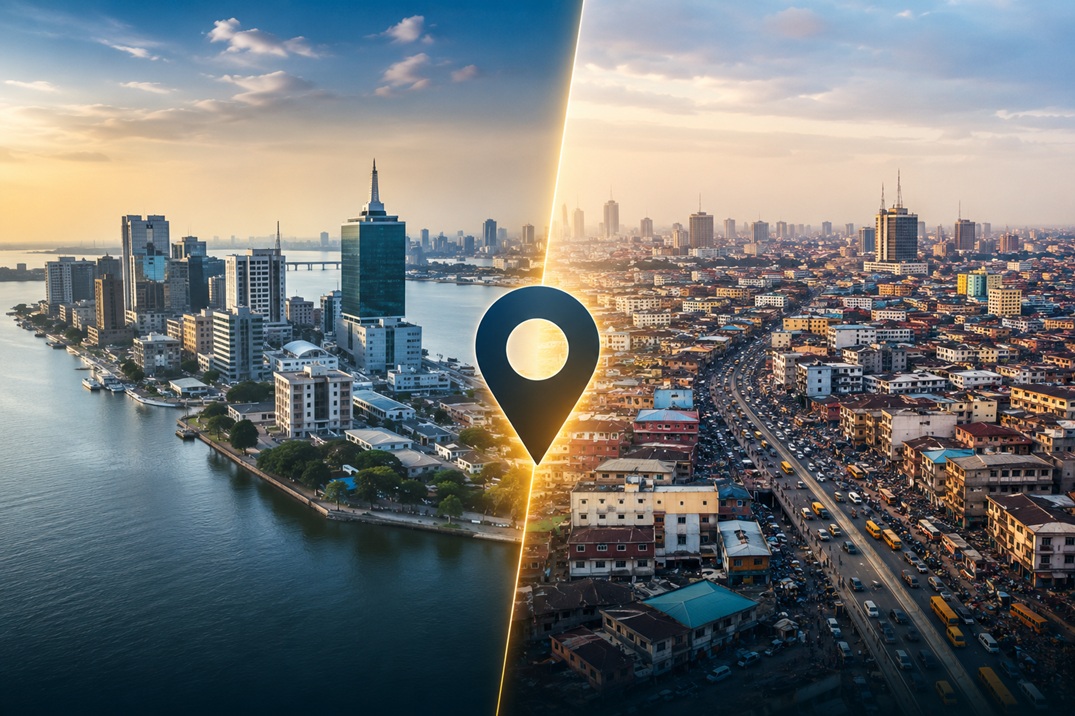
Lagos Island vs Mainland investment in 2026 is not the same debate it was five years ago. The Island still commands premium prices and prestigious addresses, but the Mainland is quietly delivering superior rental yields — and two major infrastructure projects are beginning to redraw the boundaries between the two markets entirely.
The honest answer is that neither side wins outright. The right choice depends on what you are trying to achieve — and this guide gives you the data to make that decision clearly.
1. The Core Difference: What Each Market Is Actually Selling You
Before comparing numbers, it helps to understand the fundamental difference between these two markets.
Lagos Island — which for investment purposes covers Ikoyi, Victoria Island, Lekki Phase 1, Eko Atlantic, and the upper end of Ajah — is selling you prestige, tenant quality, liquidity, and a hard-currency hedge. Property prices here are elevated not just because of demand, but because Island real estate has become a store of value for wealthy Nigerians and diaspora investors who trust bricks over naira. According to BusinessDay data, a portfolio of 10 Lagos investment properties saw its collective valuation surge from ₦9.3 billion in December 2024 to ₦25.6 billion by February 2026 — driven heavily by Island properties in Ikoyi and Victoria Island.
Lagos Mainland — which covers Yaba, Surulere, Gbagada, Maryland, Ikeja, Magodo, and Ogba — is selling you yield, accessibility, and a tenant pool that is broad, deep, and growing fast. The price-to-rent ratio on the Mainland, particularly in areas like Yaba and Surulere, sits at a healthy 12 to 16 years according to The Africanvestor — meaning property values and rental income are still in reasonable balance. On the Island, that ratio has stretched far beyond balanced market benchmarks as sale prices outpace what rents can support.
These are two different products. Choosing between them is not about which is better — it is about which one matches your investment strategy.
2. Price Comparison: What Your Money Actually Buys
The price gap between Lagos Island and Mainland in 2026 is enormous, and it is the single most important number in this comparison.
Lagos Island Property Prices in 2026
In Ikoyi, residential property sells for ₦500,000 to ₦1,000,000 per square metre in prime locations, with complete 3 to 4-bedroom duplexes ranging from ₦100 million to ₦300 million. Banana Island and premium Ikoyi developments exceed this significantly. According to The Africanvestor, the average home price in Lagos sits around ₦330 million in January 2026 — a figure heavily skewed upward by Island properties.
In Lekki Phase 1, a 2-bedroom apartment costs ₦75 million to ₦180 million. A 3-bedroom terrace in a gated estate starts from ₦150 million. In Victoria Island, commercial activity pushes prices to ₦200 million and above for quality residential units.
Lagos property prices rose approximately 18% in naira terms over the past year, driven primarily by construction cost inflation rather than a surge in buyer demand, according to The Africanvestor’s 2026 price forecast analysis.
Lagos Mainland Property Prices in 2026
On the Mainland, the same capital goes dramatically further. In Yaba, Surulere, and Gbagada, 2-bedroom flats are available from ₦30 million to ₦80 million. Ikeja GRA — the most upmarket Mainland address — sits between ₦50 million and ₦120 million for mid to premium units. Magodo Phase 2 and Ogudu GRA are comparable.
According to property investment analysis, Lagos Mainland hotspots like Ikeja GRA have seen up to 25% property value growth over the past three years — competitive with many Island appreciation rates, but at a fraction of the entry cost. Neighbourhoods along the new Red Line rail corridor, including Yaba, Ikeja, and Oshodi, are now seeing renewed investor interest from buyers who want shorter commutes without Island price tags.
The entry price difference between Island and Mainland is not marginal. In most like-for-like comparisons, the Mainland delivers the same or more square footage for 40% to 60% less capital.
3. Rental Yield: The Mainland Wins, and It Is Not Close
This is the most important data point for income investors, and the gap is larger than most people expect.
Lagos Island Rental Yields in 2026
According to The Africanvestor’s 2026 rental yield analysis, gross rental yields across Lagos range from 3% in ultra-prime Island locations to 9% in high-demand Mainland areas. On the Island specifically, the picture breaks down as follows:
Banana Island and old Ikoyi: 3% to 4.5% gross yield. The lowest in Lagos. Trophy asset pricing with limited rental upside. Rents for Banana Island duplexes now range from ₦80 million to ₦100 million per year — which sounds substantial until you look at the purchase price needed to generate it.
Victoria Island: 4.5% to 5% gross yield. Boosted by commercial activity and a reliable expat tenant base, but still fundamentally a capital-appreciation play.
Lekki Phase 1: 4.4% to 6% gross yield. Lagos’s most liquid real estate market, with a deep tenant pool of young professionals and corporate staff. The best-performing sub-zone on the Island for income investors.
Eko Atlantic: approximately 6.5% gross yield. The Island outlier. USD-denominated transactions, strong short-let demand, and newer building stock push yields above the Island average.
Lagos Mainland Rental Yields in 2026
The Mainland tells a completely different income story.
Yaba delivers gross rental yields of 6% to 9% — the highest of any major Lagos neighbourhood — driven by a structural tenant base of tech workers, university-adjacent professionals, and creative industry employees. Gbagada and Maryland consistently deliver 7% to 9%. Surulere runs 6% to 8%. Even Ikeja GRA, the most upmarket Mainland address, delivers 5% to 8% — competitive with the best Island yields at a significantly lower entry price.
According to The Africanvestor, the realistic range of net rental yields for standard Lagos investment properties spans from about 2% in luxury Island areas to 7% in well-managed Mainland properties, with most investors landing between 4% and 5.5% net after costs. Vacancy rates across prime Lagos areas sit at just 3% to 8% in 2026 — an unusually tight market by global standards that gives landlords pricing power across both geographies, but the income numbers clearly favour the Mainland.
4. Capital Appreciation: The Island’s Strongest Argument
If rental income is where the Mainland wins decisively, capital appreciation is where the Island makes its most compelling counterargument.
Island Appreciation — Driven by Scarcity and Dollar Demand
Lagos Island property benefits from something no Mainland neighbourhood can replicate: genuine physical scarcity. The Island is a finite geography. You cannot build more of it. As Lagos’s population grows and demand for quality urban addresses intensifies, Island property values have one structural direction — upward.
The numbers support this. According to BusinessDay’s February 2026 market analysis, the most aggressive price gains in Lagos are concentrated in Ikoyi, with properties in that district more than tripling in value over the past year for some categories. This is partly a naira devaluation story — as the naira weakened, dollar-denominated buyers flooded the Island market — but it is also a genuine demand story driven by the continued concentration of Nigeria’s wealthiest residents and expatriate community in a geographically constrained area.
Mainland Appreciation — Infrastructure Is Closing the Gap
The traditional argument against Mainland investment has always been infrastructure: poor roads, inconsistent power, flooding in some areas, and the long commute to Island business districts. That argument is weakening significantly in 2026.
The Fourth Mainland Bridge — connecting Lagos Mainland to Lagos Island across a 38km corridor — is now under active construction. When complete, it will shrink the commute between Gbagada, Ogudu, and Victoria Island to under 20 minutes. Property values along the Mainland side of the bridge’s projected route are already pricing in that expectation.
Simultaneously, the Red Line rail corridor — running through Yaba, Ikeja, and Oshodi — is generating renewed buyer interest in previously undervalued Mainland addresses. According to The Africanvestor’s 2026 price forecast, neighbourhoods along the Red Line are among the highest-expected-appreciation zones in Lagos for the coming two years.
Ikeja GRA has already delivered 25% property value growth over the past three years without the bridge or rail being complete. When both projects fully activate, Mainland appreciation rates may begin to rival Island numbers — at a fraction of the entry cost.
5. Liquidity and Exit: The Island Is Easier to Sell
This is a practical consideration that income investors often overlook until they need it.
Lagos Island property — particularly Lekki Phase 1, Victoria Island, and Ikoyi — is the most liquid real estate market in Nigeria. If you need to sell a well-maintained, correctly priced Island property, you will find a buyer. The market is transparent, active, and well-served by professional agents. A forced sale at a 5% to 10% discount is a realistic worst case.
Mainland property is also reasonably liquid in established areas — Yaba, Gbagada, Ikeja GRA, and Magodo all have active resale markets. But the buyer pool is narrower, the process takes longer on average, and institutional investor demand (which provides a floor under Island valuations) is largely absent.
For investors who need to know they can exit quickly — diaspora buyers, investors who may need to repatriate capital, or those with shorter time horizons — Island liquidity is a genuine advantage worth pricing into the comparison.
6. The Infrastructure Story That Changes Everything in 2026
The single most important new variable in the Lagos Island versus Mainland debate is infrastructure — specifically two projects that were in planning or early construction for years and are now materially progressing.
The Fourth Mainland Bridge
Active construction is now underway on the 38km Fourth Mainland Bridge, connecting Lagos Mainland at Lekki-Epe to the Island via a new crossing that bypasses the chronically congested Carter Bridge and Third Mainland Bridge. When complete, it will fundamentally reduce the commute penalty that has historically suppressed Mainland property values relative to the Island.
Property on the Mainland side of the bridge’s projected route — particularly in Gbagada, Ogudu, and parts of Ikorodu Road — is already registering valuation upticks from investors positioning ahead of completion.
The Red Line Rail Corridor
The Lagos Red Line, running from Agbado through Ikeja to Marina, passed through Yaba and Oshodi and is generating significant renewed investor interest. Neighbourhoods with Red Line station access are seeing buyers who previously dismissed them because of commute times suddenly recalculate the math.
According to The Africanvestor’s 2026 analysis, rail-connected Mainland nodes like Yaba and Ikeja are among the highest-priority areas for investors seeking appreciation upside in Lagos this year. The combination of existing high yields and near-term infrastructure catalysts is rare — and it will not last once the projects complete and prices fully adjust.
7. Who Each Market Is Actually For
After all the data, the clearest way to navigate this choice is to match the market to the investor profile.
Choose Lagos Island If…
You have serious capital to deploy — ₦75 million at minimum — and want the most liquid, most prestigious asset in the Lagos market. You want tenants who pay reliably in dollars or premium naira, and you can accept that your yield will be modest in exchange for asset quality. You are investing as a naira hedge and prioritise capital preservation and resale value over income. You are a diaspora investor who wants an asset that is easy to manage remotely through a professional estate agent, with a tenant base that is relatively low-maintenance.
Choose Lagos Mainland If…
Rental income is your primary objective and you want the best yield per naira invested. You have a smaller budget — ₦30 million to ₦80 million — and want to maximise what that capital can do. You are willing to be a more active landlord, managing a broader tenant base with slightly higher turnover and maintenance demands. You are investing for the medium term and want to benefit from the infrastructure-driven appreciation story that the Fourth Mainland Bridge and Red Line are beginning to generate.
Consider Doing Both
The most sophisticated Lagos investors in 2026 are not choosing one side of the bridge — they are doing both. A high-yield Mainland property in Yaba or Gbagada generates the cash flow. An Island property in Lekki or Victoria Island provides the capital anchor. Together, they create a portfolio that earns income today and builds wealth over the long term.
At MiraEmma Properties, we have clients building both types of positions — and we work with each investor to identify the specific mix that matches their capital, their timeline, and their income goals.
The debate between Island and Mainland is not about which is better. It is about which one is right for you.
Ready to find the right Lagos investment for your goals?
Frequently Asked Questions
Is Lagos Island or Mainland better for investment in 2026?
It depends entirely on your investment goal. Lagos Island — particularly Lekki Phase 1, Victoria Island, and Ikoyi — delivers better capital appreciation, superior tenant quality, and stronger liquidity. Lagos Mainland — particularly Yaba, Gbagada, and Ikeja GRA — delivers significantly higher rental yields (6% to 9% versus 3% to 6% on the Island) at a fraction of the entry price. Income-focused investors favour the Mainland; capital preservation and prestige-focused investors favour the Island.
What are property prices on Lagos Island vs Mainland in 2026?
On Lagos Island, 2-bedroom apartments in Lekki Phase 1 range from ₦75 million to ₦180 million. In Ikoyi, complete duplexes range from ₦100 million to ₦300 million or more. On Lagos Mainland, 2-bedroom flats in Yaba, Surulere, and Gbagada are available from ₦30 million to ₦80 million. Ikeja GRA sits between ₦50 million and ₦120 million for mid to premium units. According to The Africanvestor, the average home price across Lagos is approximately ₦330 million as of January 2026, a figure heavily skewed by Island property values.
Which areas on Lagos Mainland have the highest rental yields?
According to The Africanvestor’s 2026 data, the highest-yielding Mainland areas are Yaba (6% to 9%), Gbagada and Maryland (7% to 9%), Surulere (6% to 8%), and Ikeja GRA (5% to 8%). Studios and compact 1-bedroom apartments in these areas generate the highest yields per square metre, typically 1% to 2% above larger family units because of strong demand from single professionals and young couples who prioritise location over space.
How does the Fourth Mainland Bridge affect property investment?
The Fourth Mainland Bridge — now under active construction — will connect Lagos Mainland to the Island across a 38km corridor, dramatically reducing commute times between areas like Gbagada, Ogudu, and Victoria Island. Property on the Mainland side of the bridge’s projected route is already registering valuation increases from investors positioning ahead of completion. When the bridge opens, the historical price gap between Island and Mainland properties in connected zones is expected to narrow significantly.
Is Lagos Island property a good hedge against naira devaluation?
Yes — Lagos Island property, particularly in Ikoyi, Victoria Island, and Eko Atlantic, is widely used as a naira hedge by wealthy Nigerians and diaspora investors. Many transactions in premium Island developments are dollar-denominated or dollar-indexed, meaning the naira value of the asset rises automatically when the naira weakens. According to BusinessDay’s February 2026 analysis, a portfolio of 10 Lagos investment properties saw its valuation rise from ₦9.3 billion to ₦25.6 billion in under 15 months, driven largely by the combination of genuine demand and naira depreciation in Island-focused assets.
Can I invest in both Lagos Island and Mainland at the same time?
Yes — and many experienced Lagos investors do exactly this. A high-yield Mainland property in Yaba or Gbagada provides regular rental income. An Island property in Lekki Phase 1 or Victoria Island provides capital preservation and appreciation. Together they create a portfolio that earns today and builds long-term wealth, without overexposing the investor to either the yield-compression risk of the Island or the management intensity of the Mainland.