
View table of comtent
Nigerian Real Estate Investment Trusts — (REIT) — let you own a slice of income-generating property in Lagos or Abuja without buying a single plot of land, paying a lawyer, or worrying about a tenant. You can start with as little as ₦50,000, and the best-performing Nigerian REIT delivered a 38% return in 2025 alone.
If you have been watching property prices in Lagos and Abuja climb out of reach, REITs are the door that most people do not know is open.
1. What Is a REIT and How Does It Work in Nigeria?
A Real Estate Investment Trust is a fund that pools money from many investors, uses it to buy income-generating properties — shopping malls, office buildings, residential estates, warehouses — and then distributes most of the rental income back to investors as dividends.
Think of it this way: instead of buying one apartment in Lekki for ₦80 million, you and thousands of other investors pool your money into a fund that owns dozens of properties across Nigeria. You earn your share of the rental income proportional to how many units you hold. When property values rise, the value of your units rises with them.
In Nigeria, REITs are regulated by the Securities and Exchange Commission (SEC) and listed on the Nigerian Exchange (NGX). This means you buy and sell REIT units the same way you buy and sell shares — through a licensed stockbroker or an online trading platform. There are no land registry searches, no agency fees, no landlord headaches. You own real estate the way you own a stock.
Nigerian law requires REITs to distribute at least 90% of their taxable income to unitholders annually. That mandatory distribution is why REITs are specifically designed as income vehicles — the fund cannot hoard profits. It must pay them to you.
2. The Nigerian REIT Landscape in 2026
Nigeria’s REIT sector is small but growing fast. According to data from the Securities and Exchange Commission, total REIT and real estate fund assets reached ₦483.06 billion as of December 2025 — representing 6.30% of Nigeria’s ₦7.67 trillion collective investment industry. The Knight Frank Africa Horizons report valued the Nigerian REIT market at $600 million in 2024.
There are currently six real estate investment trust mutual funds operating in Nigeria. Here is who they are and how they performed.
UPDC REIT (Managed by Stanbic IBTC Asset Management)

This is Nigeria’s most widely held real estate fund, with over 211,092 unitholders as of December 2025. It delivered a standout 38% year-to-date yield in 2025 — the highest of any Nigerian REIT that year — and continued that momentum into 2026, posting a 57.25% year-to-date return as of May 29, 2026. UPDC REIT invests in a diversified portfolio of residential estates, commercial properties, and mixed-use developments. Its first-quarter 2026 results showed profit growth of 36%, driven primarily by rising rental income and an expanding asset base.
UH REIT (Union Homes Real Estate Investment Trust)
Union Homes delivered a 20.37% yield in 2025, and its momentum accelerated dramatically into 2026 — recording a 63.36% year-to-date return as of May 29, 2026, the highest among all listed Nigerian REITs for that period. Over five years from 2021 to 2025, Union Homes accumulated over ₦20 billion in total profit, demonstrating consistent earnings generation across market cycles.
SFS REIT (Skye Shelter Fund)
SFS REIT is the smallest of the listed funds by asset size but consistently punches above its weight on yield. It delivered a 25.15% yield in 2025 and has built a reputation for outperforming on a per-unit basis. In the first half of 2025, SFS recorded earnings per unit of ₦8.32 — compared to Union Homes’ ₦2.30 and UPDC’s ₦0.41. As of 2026, the fund trades at approximately ₦418.75 per unit.
MOFI Real Estate Investment Fund
The largest fund by assets — controlling ₦269.85 billion, or 55.86% of total real estate fund NAV — the MOFI REIT is an institutional-grade fund primarily designed for pension funds and large institutional investors. It delivered a 10.2% yield in 2025 with only 45 unitholders, reflecting its wholesale rather than retail orientation. Not designed for individual small investors.
Nigeria REIT
A mid-sized fund with a NAV of ₦163.63 billion and 851 unitholders. Delivered a 9.3% yield in 2025. More accessible than MOFI but still skewed toward institutional participants.
3. The Returns That Make Nigerian Reits Impossible to Ignore
The numbers deserve to be repeated clearly, because they are genuinely remarkable.
In 2025, the six Nigerian REIT mutual funds delivered an average return of 19.7%, according to Nairametrics analysis of SEC data. The top-performing fund — UPDC REIT — returned 38%. The second-best — SFS REIT — returned 25.15%.
How Do REIT Returns Compare to Other Investments?
By comparison, the average annual interest rate on a Nigerian savings account in 2025 ranged from 4% to 10%, depending on the bank and product. Treasury Bills returned approximately 18% to 22% during the same period. And direct property investment — while potentially high-return — requires tens of millions of naira upfront, full exposure to a single asset, and no ability to exit quickly.
REITs in 2026 are continuing that momentum. UH REIT posted a 63.36% return year-to-date as of May 29, 2026. UPDC REIT was not far behind at 57.25%.
These are not guaranteed future returns — past performance does not predict future performance, and 2024 was a much more mixed year for the same funds, with UPDC REIT actually losing 22% that year. But the directional story is clear: for investors willing to think in three to five year windows, Nigerian REITs have delivered significant real returns above inflation.
4. How to Start Investing in Nigerian Reits with ₦50,000

This is the part that surprises most people. You do not need millions to access Nigerian real estate through a REIT. You need a stockbroker, a BVN, and enough money to buy at least one unit.
Step 1 — Open a Brokerage Account
You need a stockbroking account with a Securities and Exchange Commission-registered broker. Leading options include Stanbic IBTC Stockbrokers, Meristem Securities, Cordros Securities, Vetiva Capital, and ARM Securities. Most now offer online account opening that takes less than 24 hours.
Step 2 — Get Your CSCS Number
The Central Securities Clearing System (CSCS) is Nigeria’s central depository for traded securities. When you open your brokerage account, your broker will register you with the CSCS and issue you a CSCS Investor ID. This is where your REIT units are held electronically.
Step 3 — Fund Your Account
Transfer your investment amount — as little as ₦50,000 — to your brokerage account. There is no minimum beyond the cost of one unit plus your broker’s transaction fee, which typically ranges from 1% to 1.5% of the transaction value.
Step 4 — Place Your Order
Log into your broker’s platform or call your broker and place a buy order for the REIT of your choice. UPDC REIT traded at approximately ₦10.00 per unit in mid-2026. At that price, ₦50,000 buys you 5,000 units. Union Homes REIT traded at approximately ₦84.70 per unit in late May 2026, meaning ₦50,000 buys approximately 590 units.
Step 5 — Receive Your Dividends
Nigerian REITs are required to distribute at least 90% of their taxable income annually. Once you hold units, you are entitled to your proportional share of those distributions. Dividends are paid directly into the bank account linked to your brokerage profile.
The entire process from account opening to first purchase can be completed in under 48 hours. There are no land registry searches, no agency fees, no structural inspections, and no landlord negotiations.
5. Rents vs Direct Property Investment: The Honest Comparison
If you can afford to buy property directly in Lagos or Abuja, REITs are not a replacement — they are a complement. But for the majority of Nigerians who cannot yet deploy ₦50 million to ₦200 million on a single property, REITs offer something direct investment cannot: real estate exposure with liquidity, diversification, and a low entry threshold.
Entry Cost and Liquidity
Direct property in Nigeria starts at ₦30 million on the Lagos Mainland. REITs start at the price of one unit — as low as ₦10 per unit for UPDC REIT. On liquidity, property in Nigeria can take months to sell, with transaction costs eating 15% or more of the value. REIT units trade on the NGX and can be sold in minutes on any trading day.
Diversification and Management
A direct property buyer owns one asset in one location. A REIT unitholder owns a fraction of a diversified portfolio spanning multiple properties and property types. And while direct property requires finding tenants, managing repairs, collecting rent, and navigating landlord-tenant disputes, REIT investors delegate all of this to a professional fund manager.
The Honest Verdict
REITs are not as high-return as the best direct property investments in a booming market. A well-bought plot in Ibeju-Lekki five years ago has outperformed any REIT. But REITs are more accessible, more liquid, more diversified, and far easier to manage — making them the more rational starting point for most Nigerian investors who are still building toward a direct purchase.
6. The Risks You Need to Understand Before You Invest
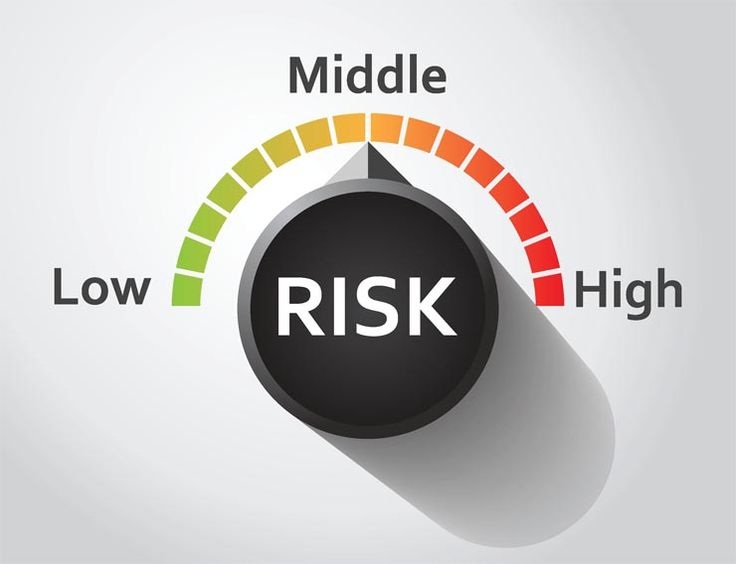
No investment is without risk, and REITs carry specific risks that every investor must understand before committing capital.
Market Price Volatility
REIT units trade on the NGX, and their prices move daily. UPDC REIT lost 22% of its value in 2024 before rebounding strongly in 2025 and 2026. If you buy at a high point and need to sell at a low point, you will lose money. REITs reward patient investors, not short-term traders.
Concentration and Regulatory Risk
Nigeria’s REIT market is dominated by a small number of funds and a small number of properties. UPDC’s own managing director noted publicly in 2026 that the requirement for REITs to distribute 90% of income limits their ability to reinvest and grow. The SEC is actively working on loosening some of these restrictions to encourage new entrants and larger scale — but until that reform is complete, the growth potential of individual funds remains structurally capped.
Dividend Income Is Not Guaranteed
The 90% distribution requirement applies to taxable income. If a fund’s properties underperform — vacancy rises, tenants default, property values fall — the dividend will shrink accordingly. These risks do not make rent a bad investment. They make them an investment that rewards people who understand what they are buying and invest with a clear timeline.
The Bottom Line
Rent are one of the most accessible and genuinely compelling investment opportunities available in 2026. They give ordinary investors exposure to income-generating real estate — the asset class that most Nigerians trust above all others — without the capital requirement, the legal complexity, or the management burden of direct property ownership.
The best-performing Nigerian REIT returned 38% in 2025 and over 57% in the first five months of 2026. The entry price is as low as ₦50,000. The process takes 48 hours.
At MiraEmma Properties, we believe that real estate wealth should not be limited to people who can afford to buy outright. REITs are one part of a broader real estate investment strategy — and for clients who are building toward a direct property purchase, they are often the smartest first step.
When you are ready to take that next step — from REIT investor to property owner — our team is here to guide you through it.
Frequently Asked Questions
What is a REIT in Nigeria?
A Real Estate Investment Trust (REIT) in Nigeria is a SEC-regulated fund that pools money from investors to purchase and manage income-generating properties — such as residential estates, office buildings, and shopping malls. REITs are listed on the Nigerian Exchange (NGX), trade like shares, and are required by law to distribute at least 90% of their taxable income to unitholders annually. They allow ordinary investors to access real estate returns without buying property directly.
Which Nigerian REIT performed best in 2025 and 2026?
UPDC REIT delivered the highest year-to-date yield of 38% among Nigerian REIT mutual funds in 2025, according to SEC data compiled by Nairametrics. In 2026, UH REIT (Union Homes) led the listed REITs with a 63.36% year-to-date return as of May 29, followed closely by UPDC REIT at 57.25%. SFS REIT delivered 25.15% in 2025 and continues to outperform on a per-unit earnings basis.
How much money do I need to start investing in Nigerian Reits?
You can start with as little as the cost of one REIT unit. As of mid-2026, UPDC REIT traded at approximately ₦10.00 per unit, meaning ₦50,000 buys 5,000 units. Union Homes REIT traded at approximately ₦84.70 per unit. Most brokerage accounts can be opened and funded online in under 24 hours, and your first REIT purchase can be completed the same day your account is approved.
Are Nigerian Reits better than buying property directly?
REITs are not better than the best direct property investments — a well-chosen plot in a growth corridor like Ibeju-Lekki has historically outperformed any REIT in a strong market. But REITs are more accessible, more liquid, more diversified, and far easier to manage than direct property. For investors who cannot yet deploy ₦30 million to ₦200 million on a direct purchase, REITs offer genuine real estate exposure with a fraction of the capital and none of the operational complexity.
What are the risks of investing in Nigerian Reits?
The main risks are market price volatility — REIT unit prices move daily and can fall significantly, as UPDC REIT demonstrated with a 22% loss in 2024 before recovering — concentration risk, regulatory constraints from the 90% distribution requirement, and dividend variability if fund properties underperform. REITs reward patient, informed investors with a three to five year minimum horizon.
How do I buy REIT units in Nigeria?
Open a brokerage account with any SEC-registered stockbroker — Stanbic IBTC Stockbrokers, Meristem Securities, Cordros Securities, Vetiva Capital, or ARM Securities are leading options. Most offer online account opening. Once your account is active and funded, place a buy order for the REIT of your choice through your broker’s trading platform. Your units will be held in your CSCS investor account, and dividends will be paid directly to your linked bank account.