Every January, millions of Lagos and Abuja residents go through the same painful ritual. The landlord’s letter arrives. The rent has gone up — again. The panic sets in. And the question surfaces for the hundredth time: should I just buy?
It is one of the most emotionally loaded financial decisions a Nigerian can make. And it is almost always made with incomplete information, driven more by the exhaustion of renting than by a clear-eyed look at the actual numbers.
This article gives you those numbers. We break down the real cost of renting versus buying in Lagos and Abuja in 2026 — including the figures that most property agents conveniently leave out — and give you a framework for making the decision that is right for your specific situation.
1. What Renting Actually Costs You in Lagos and Abuja in 2026
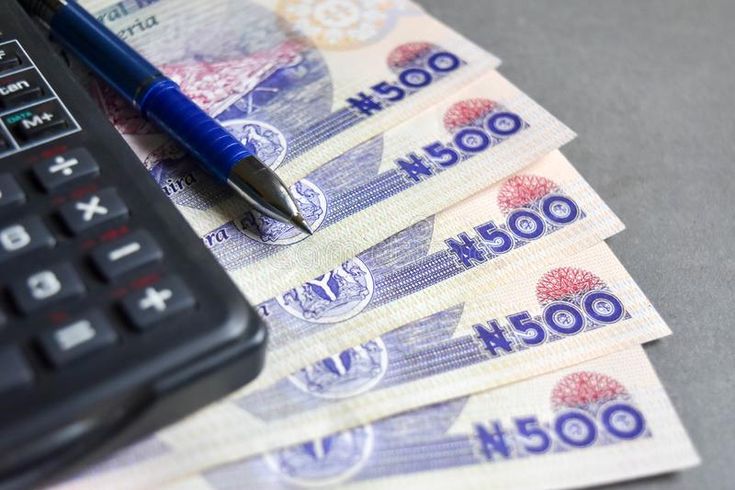
Before you can decide whether buying makes sense, you need to know what renting is actually costing you today. And the answer is almost certainly more than you think — because in Nigeria, the advertised rent is never the final number.
In Lagos, the “Total Package” — the actual amount you must pay to collect the keys — typically runs 25% to 40% above the advertised annual rent. This is because in addition to the rent itself, you will pay an agency fee (typically 10% of the annual rent), a legal fee (another 10%), and a caution deposit of one to three months’ rent. Lagos State’s Tenancy Law caps agency and legal fees individually at 10% each, but the market regularly exceeds this.
Here is what that looks like in practice across key Lagos locations in 2026:
In Lekki Phase 1, a standard 2-bedroom apartment currently rents for N3.5 million to N6 million per year. Add the Total Package charges and your first-year outlay jumps to approximately N4.4 million to N7.5 million. In subsequent years, you pay the rent plus annual increases — which Lagos data shows have been running at 10% to 20% year-on-year in tight markets.
In Ikoyi and Victoria Island, a 2-bedroom commands N10 million to N15 million per year. Service charges on top of that in gated estates can add another N500,000 to N2 million annually.
On the Mainland — in areas like Surulere, Gbagada, Yaba, and Magodo — a 2-bedroom rents for N1.5 million to N3.5 million per year, making this the most financially accessible zone for renters in Lagos.
Rental Prices Across Abuja in 2026
In Abuja, the picture is different. Rents are generally lower than Lagos in comparable segments, and the market is less volatile. A 2-bedroom apartment in Gwarinpa or Lugbe rents for N700,000 to N1.5 million per year. In Wuse 2 or Jabi, you are looking at N1.5 million to N3 million. In Maitama or Asokoro, premium 2 and 3-bedroom apartments range from N3 million to N8 million annually. Abuja also has fewer extreme rent spikes than Lagos, making long-term budgeting more predictable for tenants.
The hidden cost that both cities share, and that rarely appears in any rent calculation, is the psychological and logistical cost of renting in Nigeria. The annual January panic. The landlord who refuses maintenance. The threat of eviction when the building is sold. The inability to renovate or personalise your space. These costs do not appear on a spreadsheet, but they are real — and they accumulate.
2. What Buying Actually Costs You in Lagos and Abuja in 2026
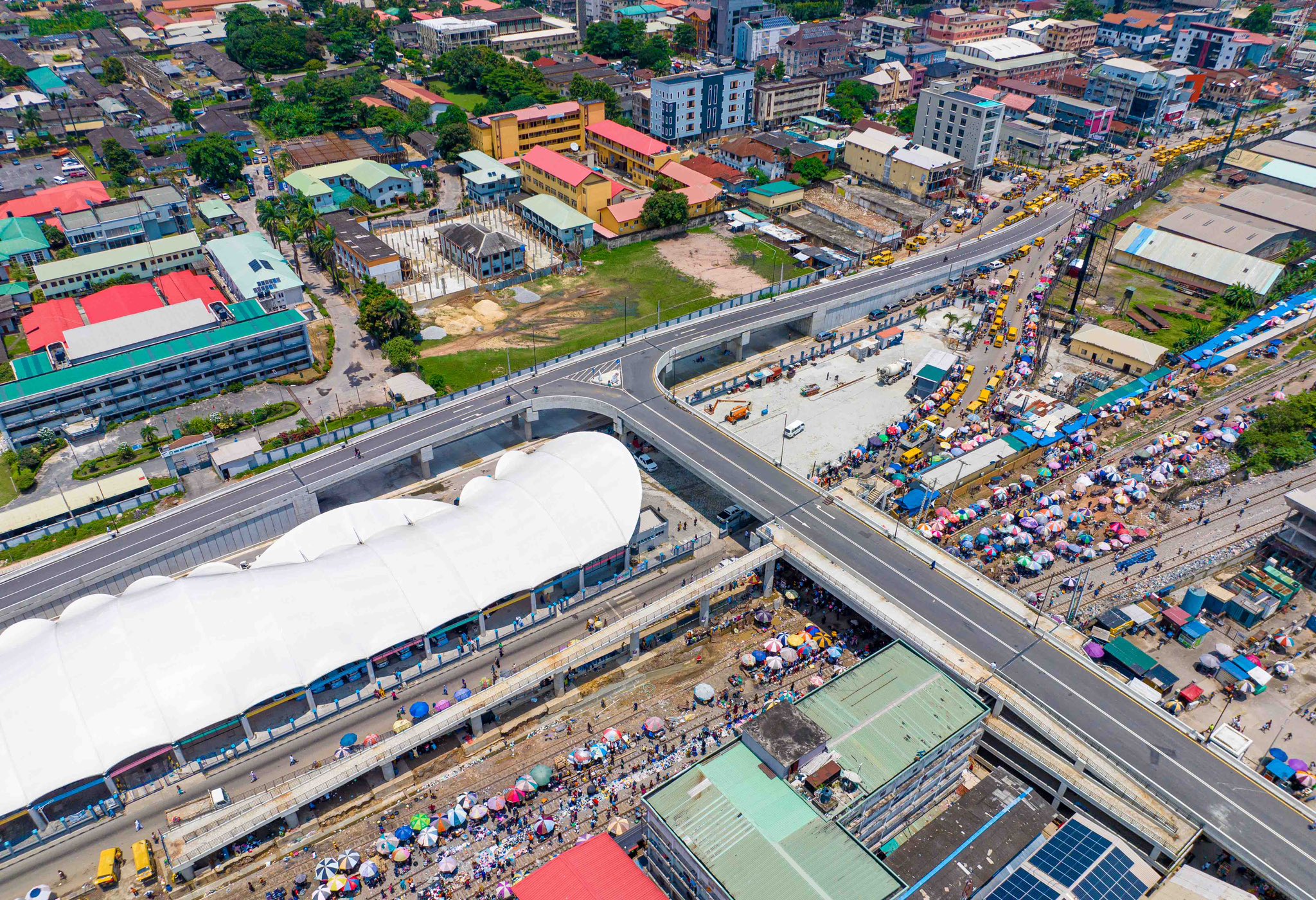
Buying property in Nigeria is expensive, and the entry costs are far higher than the purchase price alone. If you are going to compare renting to buying honestly, you need to account for every number.
The Real Closing Costs of Buying in Nigeria
The purchase price is only the beginning. On top of it, you will pay:
Agency fee: 5% to 10% of the purchase price in most transactions.
Legal fee: 5% to 10% of the purchase price for your independent lawyer and the documentation process.
Governor’s Consent or Title Perfection: Varies by state, but typically 3% to 6% of the assessed value of the property.
Survey and valuation fees: Typically N150,000 to N500,000 depending on the property.
Moving and furnishing costs: Often overlooked but can easily reach N2 million to N10 million for a new home.
Using the 15% Buffer Rule — which we recommend to all buyers — means that if you have N120 million to spend, you should buy a property priced at no more than N104 million and reserve the remaining N16 million for all these closing costs.
Here is what the purchase market looks like in key locations in 2026:
In Lekki Phase 1, a standard 2-bedroom apartment costs N75 million to N180 million. A 3-bedroom terrace in a gated estate starts at N150 million and goes well above N250 million in premium developments.
In Ikoyi and Victoria Island, a 2-bedroom apartment starts at approximately N200 million and can exceed N400 million in prestige developments. Complete houses routinely cross N500 million.
On the Lagos Mainland — in areas like Surulere, Yaba, Gbagada, and Ikeja — 2-bedroom flats are available from N30 million to N80 million, making this the most accessible buying market in the city.
In Abuja, a 2-bedroom flat in Gwarinpa or Lugbe starts at approximately N35 million to N70 million. In Wuse 2 or Jabi, comparable properties range from N70 million to N150 million. Maitama and Asokoro command N150 million to N400 million or more for premium homes.
Abuja benefits from a more centralised land regime through the FCT’s AGIS system, which reduces the title fraud risks that complicate Lagos purchases.
3. The Mortgage Reality — And Why Most Buyers Pay Cash
This is the part of the renting versus buying conversation that most people in Nigeria do not want to face: for the majority of buyers, a conventional bank mortgage is not a viable option in 2026.
Commercial bank mortgage rates in Nigeria currently range from 15% to 28% per annum.
At 20% interest on a 20-year mortgage for a N100 million property with a 20% down payment, your monthly repayment would be approximately N1.35 million.
That means you need a monthly income of at least N3.85 million just to qualify — and that is before rent on your current accommodation, school fees, utilities, and living expenses.
The Federal Government’s MREIF program and the Federal Mortgage Bank of Nigeria (FMBN) offer rates as low as 6% to 9.75% on qualifying loans, which dramatically changes the affordability picture.
At 9.75% on a 20-year mortgage for the same property, the monthly repayment drops to approximately N930,000.
However, access to these programs is limited, primarily targeted at contributors to the National Housing Fund, and the queue for disbursement remains long.
The practical reality is that the vast majority of property purchases in Lagos and Abuja are cash transactions or off-plan installment purchases — where a buyer pays a deposit (typically 20% to 40%) and spreads the balance over 12 to 36 months during construction. This is how most Nigerian buyers navigate the mortgage gap.
If you are considering a purchase, your first question should not be “can I get a mortgage?” but rather “do I have the cash or can I access a structured off-plan payment plan that fits my income?”
4. The Numbers Head-to-Head: A Real-World Comparison

Let us use a concrete example to illustrate how the renting versus buying calculation actually plays out.
Scenario: Mid-Market Lagos — 2-Bedroom in Lekki Phase 1
Renting path:
Current annual rent: N4.5 million
Total Package (Year 1): N5.6 million
Annual rent increase at 15% per year — which is conservative for Lagos
First year cost: N5.6 million (including fees)
Second year cost: N5.18 million
Third year cost: N5.95 million
Year 4 cost: N6.84 million
Year 5 cost: N7.87 million
Total renting cost over 5 years: approximately N31.4 million
At the end of year 5, you own nothing.
Buying path:
Purchase price: N120 million (2-bedroom apartment)
Closing costs at 15%: N18 million
Total outlay: N138 million
Annual property appreciation at 15% per year (Lagos average): Your N120 million property becomes approximately N241 million by Year 5.
Equity built: N103 million in appreciation alone over 5 years, before accounting for any rental income if you let the property.
The break-even point — the year at which buying becomes definitively cheaper than renting on a cumulative basis, accounting for the full cost of capital — typically falls between years 4 and 6 in Lagos for mid-market properties. Beyond that window, ownership dramatically outperforms renting in financial terms.
In Abuja, where property appreciation is steadier but less dramatic than Lagos, the break-even window is slightly longer — typically years 6 to 8 for mid-market FCT properties — but the lower volatility and more predictable rental environment makes the calculation more straightforward.
The key caveat on both calculations: this comparison assumes you have the capital to buy outright or through a structured payment plan. If buying requires an expensive commercial mortgage at 20% or above, the mathematics changes significantly and renting may be the more financially rational choice until you can accumulate a larger deposit or access a subsidised mortgage.
5. When Renting Is the Smarter Financial Choice
Buying is not universally better than renting. There are specific situations where renting is the more intelligent financial decision in the Lagos and Abuja markets — and ignoring this is how people end up in financial distress.
Rent if you are in Lagos or Abuja for less than three years. The transaction costs of buying — agency fees, legal fees, Governor’s Consent — are too high to recover in a short holding period. You will almost certainly exit the investment at a loss if you sell within two to three years of purchase.
Rent if buying requires a commercial mortgage at above 18% interest. At that rate, your monthly repayments may exceed the equivalent rental cost, and the interest payments represent a genuine destruction of capital rather than wealth building.
Rent if you cannot yet afford to apply the 15% Buffer Rule. If every naira you have will be consumed by the purchase price alone, you are not financially ready to buy. Closing costs, maintenance, and unexpected expenses will create a crisis.
Rent if your life circumstances are uncertain. A job relocation, a career change, a growing family, or plans to travel all argue for the flexibility that renting provides. The liquidity cost of buying — the fact that your capital is locked in an illiquid asset — has a real value that should not be ignored.

6. When Buying Is the Smarter Financial Choice
Conversely, there are clear signals that tell you it is time to buy — and if you are experiencing all of them, every additional year of renting is costing you real wealth.
Buy if you have been in Lagos or Abuja for more than three years and plan to stay for at least five more. The break-even mathematics clearly favour ownership over this horizon in both cities.
Buy if you have the capital to apply the 15% Buffer Rule and still sleep comfortably at night. If your purchase, your closing costs, and your emergency fund are all covered, you are in a healthy position to buy.
Buy if you are facing annual rent increases that are consistently above 15% and you are in a prime location you intend to stay in long-term. You are literally paying someone else’s mortgage and letting them build equity on your payments.
Buy if you have dependants or a long-term family plan. The stability of owning — the absence of landlord risk, the ability to renovate and personalise — has a quality-of-life value that compounds over time and eventually dwarfs the financial comparison.
Buy if you can access off-plan pricing in a growth corridor. Buying a property at today’s construction-stage price in a developing estate in Abuja’s Katampe Extension or Guzape, or along the Lekki-Epe corridor in Lagos, and collecting the appreciation between contract and completion is one of the most efficient wealth-building strategies available in the Nigerian market today.
The Decision Framework
After all the numbers, the honest answer is that the renting versus buying decision in Lagos and Abuja in 2026 comes down to four questions:
How long are you staying? Under 3 years — rent. Over 5 years — buy.
Can you apply the 15% Buffer Rule? If not, keep saving.
Can you access cash or off-plan financing rather than a high-rate commercial mortgage? If yes, the buying case is strong. If not, wait.
Are you buying a property with genuine resale demand? A well-located 2 or 3-bedroom in a gated estate always has a buyer. An unusual, oversized, or poorly located property does not.
At MiraEmma Properties, we spend as much time helping clients understand when not to buy as we do helping them find the right property. The best real estate decisions are made with clear information, not under the pressure of January rent panic.
When you are ready to look at the numbers for your specific situation — your income, your savings, your timeline, your target location — our investment team is ready to walk through it with you. return and currency reality. We can connect you with dollar-denominated developments, verified escrow arrangements, and independent legal counsel who understands the specific complexity of transacting from abroad.
Frequently Asked Questions
Is it better to rent or buy property in Lagos in 2026?
For anyone planning to stay in Lagos for five or more years with sufficient capital for the purchase and closing costs, buying is almost always the stronger financial decision. Lagos property has appreciated between 15% and 39.5% annually in recent years, meaning the asset value gain on a well-located purchase can far exceed the cumulative cost of ownership within five to six years. Renting makes more sense for short stays of under three years, for buyers who would need a high-rate commercial mortgage above 18%, or for those who do not yet have enough capital to apply the 15% Buffer Rule.
How much does it cost to buy a 2-bedroom apartment in Lagos vs Abuja in 2026?
In Lagos, a 2-bedroom apartment in Lekki Phase 1 costs approximately N75 million to N180 million. On the Mainland in areas like Surulere or Gbagada, the range is N30 million to N80 million. In Abuja, a 2-bedroom apartment in Gwarinpa or Lugbe starts from N35 million to N70 million. Wuse 2 or Jabi, comparable properties range from N70 million to N150 million. In both cities, you should budget an additional 15% above the purchase price for closing costs.
What are mortgage interest rates in Nigeria in 2026?
Commercial bank mortgage rates currently range from 15% to 28% per annum, making them unaffordable for most buyers without very high incomes. The Federal Government’s MREIF program and the Federal Mortgage Bank of Nigeria (FMBN) offer subsidised rates of 6% to 9.75% for qualifying applicants, primarily those who have been contributing to the National Housing Fund. Most Nigerian buyers use cash savings or off-plan installment payment plans rather than commercial mortgages.
How long before buying is cheaper than renting in Lagos and Abuja?
In Lagos, the break-even point — where the cumulative cost of buying (including closing costs and cost of capital) falls below the cumulative cost of renting — typically falls between years 4 and 6 for mid-market properties. In Abuja, the break-even window is slightly longer at years 6 to 8, reflecting steadier but less dramatic price appreciation. After break-even, ownership dramatically outperforms renting in financial terms, particularly as property values continue to rise.